Operational clarity
Readable aircraft symbols, datablocks, filters, range rings, selected levels, leader lines and label management for a clean working display.

The Aerium FID system provides a clear operational traffic picture for aerodromes, ATC units, AFIS providers, AGCS operators, briefing rooms and aviation operations teams. It combines live aircraft awareness, local airspace overlays, configurable operational alerts and integrated replay in a browser-based display designed for dedicated operational screens.
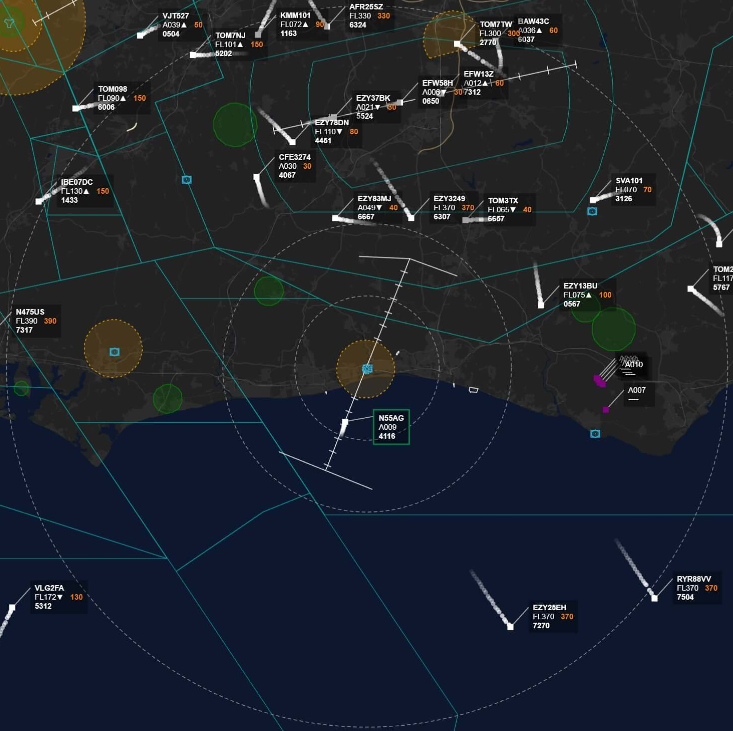
Many smaller airports and ANSPs rely on disconnected displays, unapproved public tracking tools or ad-hoc receiver outputs. Aerium FID brings the operational picture into one locally configured interface: traffic, airspace, alerts, replay and evidence support, presented in a way that is suitable for tower, operations and briefing environments. Designed and developed by operational UK ATCOs.
Readable aircraft symbols, datablocks, filters, range rings, selected levels, leader lines and label management for a clean working display.
Configured around your aerodrome, airspace, procedures, squawk logic, alert areas, runway geometry and operational priorities.
Integrated replay and export tools support occurrence review, training, safety meetings, investigation and operational learning.
Aerium FID is data-source agnostic and can integrate with a range of surveillance and electronic conspicuity technologies. The system can combine multiple data sources into a single operational display, helping provide a comprehensive traffic picture tailored to local requirements.
Supports ADS-B traffic from local receivers, networked sensors and compatible surveillance infrastructure.
Supports multilateration-derived aircraft positions where available, providing enhanced visibility of suitably equipped aircraft.
Supports electronic conspicuity data sources including FLARM and PilotAware, helping improve visibility of gliders, light aircraft and other cooperative users.
Can accept aircraft and surveillance data in ASTERIX format, supporting integration with suitable radar, surveillance and network data systems where appropriate.
The Aerium FID can include customer-defined alerting logic for risks and events that matter locally. Alerting behaviour, thresholds and limitations should be documented within the customer’s own procedures and safety management arrangements and may require regulatory approval before use.
Support awareness of selected converging traffic situations using locally defined parameters and presentation rules.
Highlight aircraft entering or operating within defined local airspace volumes or alert regions.
Display selected TCAS Resolution Advisory information in the datablock where supported by the available aircraft data.
Clear and unambiguous display of emergency squawks and other locally configured events.
Replay is central to Aerium FID. It helps users review previous scenarios, reconstruct alerts, support local investigations, brief controllers and retain evidence for safety review activity.
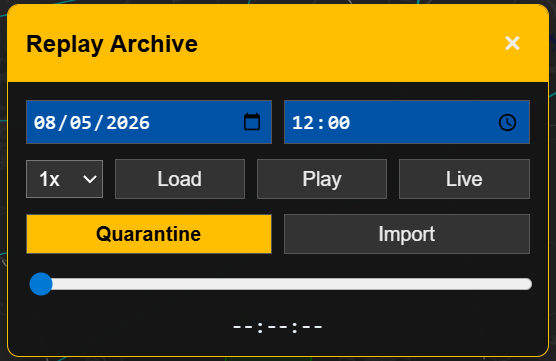
Review recorded traffic by time, move through the event and assess how the operational picture developed.
Use faster playback for quiet periods or slower review when reconstructing complex or safety-significant events.
Export defined replay windows for occurrence review, audit, training packs or safety action group discussion.
Aerium FID is a situational awareness and operational support display. It is intended to be introduced, configured and used within the customer’s own approval, change management and safety assurance arrangements.
Aerium FID is currently deployed within UK aviation operational environments and has been developed to support introduction through formal change management and safety assurance processes. A CAP670-compliant safety case package is available to support local implementation, operational evaluation and regulatory engagement where required.
The product supports defined use cases, degraded-mode behaviour, configuration control, replay evidence, documented limitations and human factors review. This helps operators explain how the display is used, what it is not used for and how alerting functions are controlled locally.
Aerium FID is supplied with supporting safety case documentation aligned with CAP670 principles. Documentation can be tailored to local deployment arrangements and supports operational trials, hazard identification, assurance activities and change management processes.
Dark operational theme, scalable datablocks, declutter options, prioritised alerts and clear warning states support rapid interpretation and reduced visual workload.
Aerium FID does not replace certified ATS surveillance systems or approved separation services unless specifically integrated, authorised and safety-assessed within local arrangements.
Aerium FID is suitable for dedicated tower screens, operations workstations, briefing rooms and replay review positions. Deployments are configured around available data sources, local network design and customer safety arrangements.
| ATC tower | Supported |
|---|---|
| AFIS / AGCS | Supported |
| Operations room | Supported |
| Briefing room | Supported |
| Training and replay | Supported |
| Local airspace overlays | Supported |
Request a demonstration, discuss your local operational requirements or review how Aerium FID could support your unit’s traffic display, replay, alerting and safety assurance needs.