
Operationally led design
The interface, datablocks, alerts and presentation logic are designed around clarity, low distraction and rapid interpretation.
Aerium FID is designed for UK aviation environments where users need a practical, locally relevant operational traffic picture. This page explains typical use cases, resilience features, safety management support, configuration options and deployment considerations.
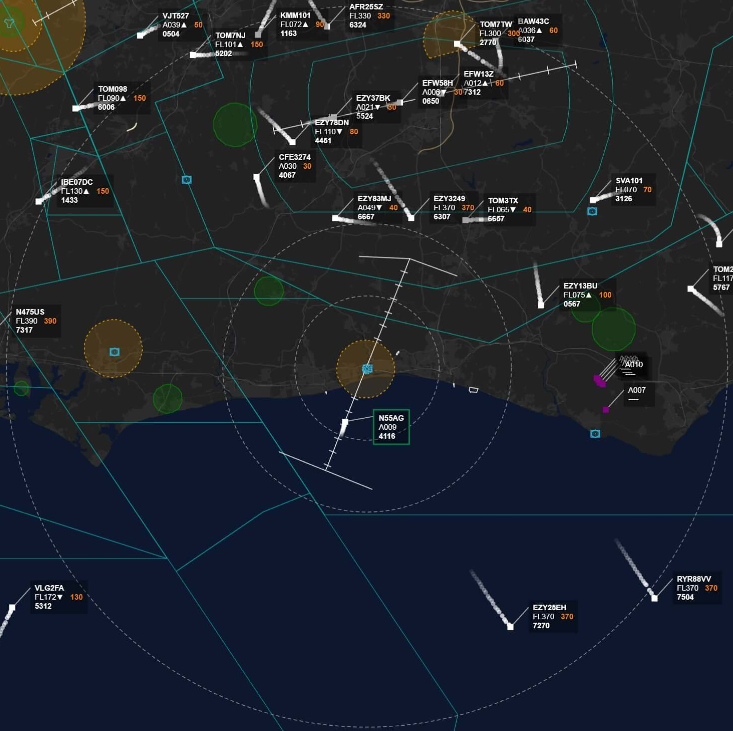
Aerium FID is intended as a professional flight information display and situational awareness platform. It is built around local operating procedures, readable presentation, resilience, replay and evidence support.
The interface, datablocks, alerts and presentation logic are designed around clarity, low distraction and rapid interpretation.
Defined configuration, known alert logic, replay capability and documented limitations support local safety management.
Airspace, squawk labels, alert thresholds, overlays, filters, range rings and display behaviour can be tailored locally.
Aerium FID can be deployed as a tower display, briefing screen, replay tool, training aid or operations-room display.
Smaller ATS units need dependable systems with low support overhead. Aerium FID is browser-based, can operate from local infrastructure and supports clear status indication where data sources or services are degraded.
| Data sources | Local ADS-B / Mode S infrastructure, network feeds and compatible aircraft data outputs. |
|---|---|
| Server | Local Aerium FID host serving the display, overlays, replay archive and site configuration. |
| Clients | Browser-based tower, briefing, operations or replay workstations on approved networks. |
| Degraded mode | Status indication where data feeds, internet connectivity or replay state require operator awareness. |
Each Aerium FID deployment can reflect the customer’s airspace structures, locally meaningful squawk labels, alert rules, operating assumptions and preferred screen layouts.
CAS, ATZs, FRZs, runway centrelines, VRPs, navaids, approach geometry, danger areas, obstacles and site-specific areas.
Airspace alert regions, altitude thresholds, squawks, squawk ranges and local presentation behaviour.
Label scaling, compact datablocks, filters, selected-level display, range rings, replay controls and screen preferences.
Aerium FID does not replace a unit’s approved procedures, but it can provide useful supporting evidence and tooling within a documented safety management framework.
Replay, scrub and export capability can support occurrence review, training debriefs, safety meetings and local investigation activity.
Alert rules can be documented so that assumptions, thresholds, limitations and expected operator responses are understood.
High contrast, scalable labels, declutter options and prioritised alerting support workload management and rapid interpretation.
No. It can be configured for local network operation using local data sources. Optional external services may depend on internet access if enabled.
Yes. It is designed to work with local aircraft data infrastructure and networked receiver arrangements, subject to configuration and data availability.
Yes. Replay, time selection, accelerated playback, import/export and quarantine-style event export are supported.
Yes. Local overlays, airspace alerting, squawk logic, altitude gates, filters and display preferences can be configured.
Aerium FID is a situational awareness and flight information display platform. Operational use must be assessed and authorised locally.
Yes. A demonstration can be tailored to the customer’s operating context, including overlays, alerts, deployment and safety-case considerations.
Arrange a remote demonstration, discuss local deployment requirements or review how Aerium FID could support your unit’s operational display, replay and safety management needs.